Introduction
A submerged entry nozzle (SEN) is an essential refractory component of the continuous steel casting process. It transfers molten steel from the tundish into the mold and is completely submerged under the liquid steel surface. This type of construction keeps the steel away from air, reduces turbulence, and plays an important role in maintaining high-quality casting conditions.
Function and Role
The SEN performs several critical functions:
- Regulation of molten steel flow from tundish to mold cavity.
- Prevent re-oxidation by maintaining the flow submerged and protected from atmospheric oxygen.
- Reducing turbulence inside the mold to minimize surface defects and inclusion entrapment.
- Regulation of the steel flow pattern for improved solidification and reduction of the breakout risk.
With the controlled, stable, and clean flow, the SEN has a direct impact on process efficiency and product quality.
Design and Construction
SEN typically is mounted on the top of the tundish nozzle and goes down into the mold cavity. Common design characteristics are:
- Bore shape and size: Designed for flow velocity and grade of steel.
- Outlet ports: Typically curved to direct the jet and establish the flow pattern.
- Anti-clogging coatings or linings: Reduce inclusion buildup.
- Flange or coupling system: Offers a hermetic, tight connection with the tundish.
- Different steel grades and casting velocities require specific SEN geometries to provide optimum performance.
Materials and Properties
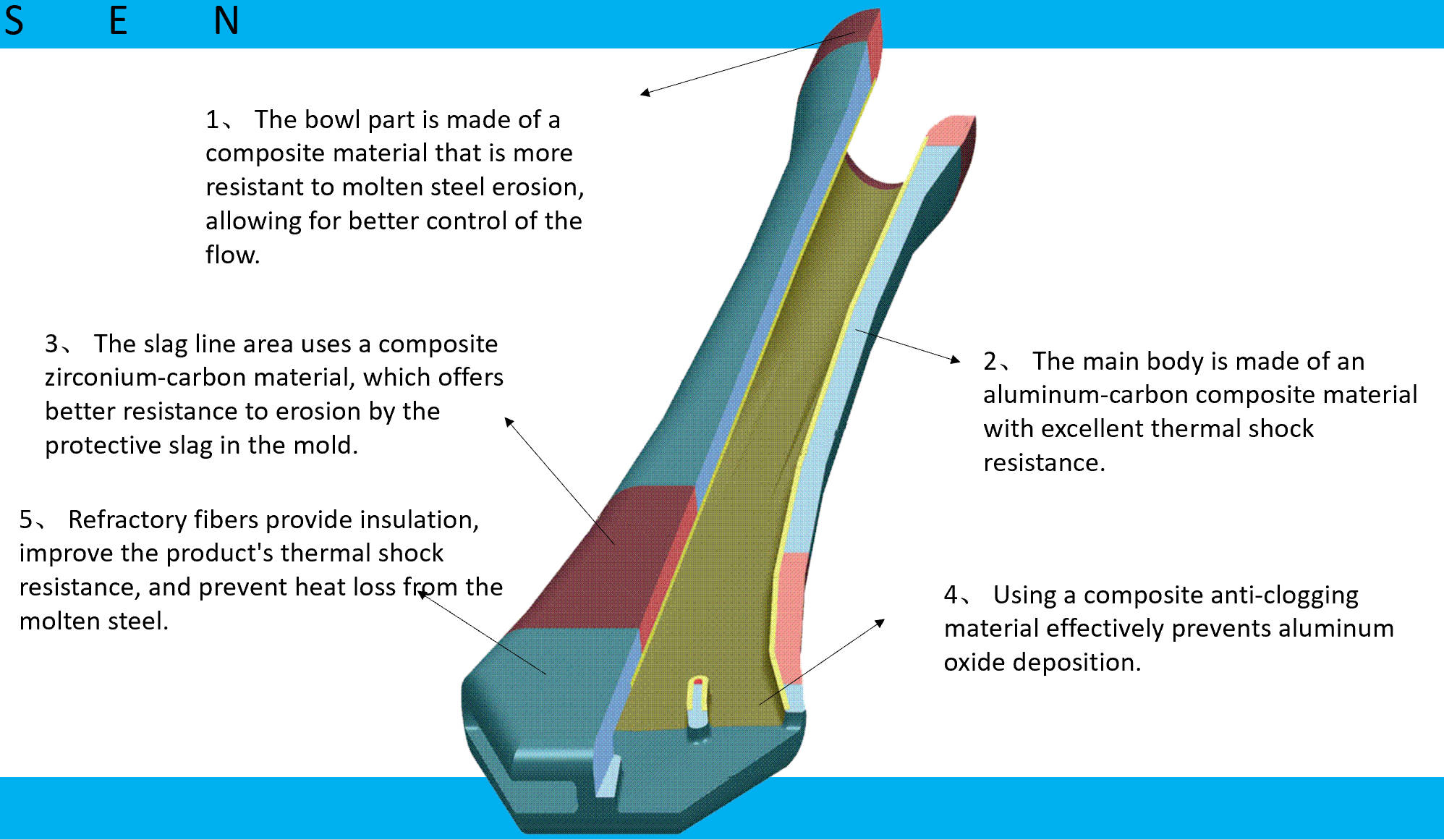
The SEN is exposed to heat conditions, chemical corrosion, and abrasion. Thus, it is typically made of good-quality refractories such as:
- Alumina-graphite composites
- Zirconia-containing refractories with greater erosion resistance
- Specific anti-oxidation additives for extending service life
Key features are:
Thermal shock resistance to accommodate sudden changes in temperature and excellent erosion and corrosion resistance against slags and molten steel. It also has dimensional stability to ensure uniform flow.
Performance Considerations
The efficiency of an underwater entry nozzle is a function of:
- Tendency to clog due to alumina or other inclusion buildup.
- Uniformity of flow to provide uniform distribution across the mold width.
- Wear rate, or the rate at which the nozzle would need to be replaced.
- Failure or blockage of SEN can lead to surface defects, inclusion entrapment or disruption of casting.
Innovations and Improvements
Recent SEN (submerged entry nozzle) designs comprise:
- Argon gas purging systems to reduce clogging.
- Optimized port angles for improved mold flow circulation.
- Improved erosion and chemical attack resistance of advanced composite materials.
- Nanotechnology-enhanced refractories with longer life.
How does the SEN Prevent Reoxidation during Steel Transfer in Continuous Casting?

The Submerged Entry Nozzle (SEN) avoids reoxidation in continuous casting steel transfer by offering a submerged flow of molten steel from the tundish into the mold, literally protecting the stream of steel from atmospheric air and oxygen. Its location below the surface ensures that the molten steel flow is submerged in the molten bath, reducing the turbulence and atmospheric oxygen contact, and therefore avoiding oxidation reactions that would contaminate steel quality.
Specifically, the SEN is a controlled flow that directs the molten steel quietly and steadily into the mold, shaping it with minimal splashing and surface agitation which can entrain the air. By keeping the steel flow “quiet” and submerged, the SEN protects the steel from reoxidation while it is flowing from the tundish to the mold.
Briefly, the submergible nature and flow behavior of the SEN control steel cleanliness by limiting oxygen interaction during continuous casting, thereby ensuring an uninterrupted supply of high-quality liquid steel to the mold.
Maintenance and Handling
It must be protected from chipping or cracking before installation. Preheating before use reduces thermal shock. Regularly inspecting it during casting helps keep wear patterns and clogging issues under control from the start.
How to select a sub entry nozzle for a high – precision application
In high-precision applications, the selection of a sub entry nozzle is a critical decision that can significantly impact the quality and efficiency of the process. As a trusted sub entry nozzle supplier, we understand the complexities involved in this selection process and are here to guide you through the key considerations.
Understanding the Basics of Sub Entry Nozzles
Before delving into the selection criteria, it’s essential to have a clear understanding of what a sub entry nozzle is and its role in high-precision applications. A sub entry nozzle, also known as a Subentry Nozzle, is a crucial component in continuous casting processes, particularly in the transfer of molten metal from the tundish to the mold. It helps control the flow of the molten metal, ensuring a smooth and stable casting process.
The Tundish Shroud is often used in conjunction with the sub entry nozzle. It acts as a protective barrier, preventing the molten metal from coming into contact with the atmosphere, which can cause oxidation and other impurities.
Key Factors in Selecting a Sub Entry Nozzle for High-Precision Applications
1. Material Compatibility
The material of the sub entry nozzle must be compatible with the molten metal being cast. Different metals have different melting points, chemical compositions, and reactivity levels. For example, steel has a high melting point and can be highly reactive, so a nozzle made from a material with high refractoriness and chemical stability, such as alumina-graphite, is often preferred. On the other hand, non-ferrous metals like aluminum may require a different type of nozzle material to prevent corrosion and ensure a clean casting.
2. Flow Control
Precise flow control is essential in high-precision applications. The design of the sub entry nozzle, including its inner diameter, shape, and the number and size of the outlets, can significantly affect the flow rate and distribution of the molten metal. A well-designed nozzle should be able to provide a uniform flow of metal into the mold, minimizing turbulence and the formation of defects such as air bubbles and slag inclusions. For example, a multi-port nozzle can be used to distribute the molten metal more evenly across the mold, improving the quality of the casting.
3. Thermal Resistance
During the casting process, the sub entry nozzle is exposed to extremely high temperatures. It must be able to withstand these temperatures without significant deformation or degradation. The thermal conductivity of the nozzle material also plays a crucial role. A material with low thermal conductivity can help reduce heat loss from the molten metal, ensuring that it remains in a molten state throughout the casting process. Additionally, the nozzle should be able to resist thermal shock, which can occur when there are rapid changes in temperature.
4. Wear Resistance
The constant flow of molten metal through the sub entry nozzle can cause significant wear over time. A nozzle with high wear resistance will have a longer service life, reducing the frequency of replacement and downtime. The surface finish of the nozzle can also affect its wear resistance. A smooth surface can reduce friction and the adhesion of molten metal, minimizing wear.
5. Precision and Tolerance
In high-precision applications, the dimensions and shape of the sub entry nozzle must be within tight tolerances. Even small deviations in the nozzle’s inner diameter or the alignment of the outlets can have a significant impact on the flow of the molten metal and the quality of the casting. Therefore, it’s important to choose a supplier that can provide nozzles with high precision manufacturing and strict quality control.
Case Studies: Real-World Examples of Sub Entry Nozzle Selection
Case 1: High-Speed Steel Casting
A steel manufacturer was experiencing problems with the quality of their high-speed steel castings. The castings had a high number of defects, including porosity and surface cracks. After analyzing the casting process, it was found that the sub entry nozzle being used was not providing sufficient flow control. The nozzle had a single, large outlet, which caused uneven distribution of the molten metal in the mold.
The manufacturer switched to a multi-port sub entry nozzle with a smaller inner diameter and multiple outlets. This new nozzle design allowed for more precise flow control, resulting in a more uniform distribution of the molten metal in the mold. As a result, the number of defects in the castings was significantly reduced, and the overall quality of the products improved.
Case 2: Aluminum Alloy Casting
An aluminum alloy casting company was facing issues with corrosion of the sub entry nozzles. The nozzles were made from a material that was not fully compatible with the aluminum alloy, leading to rapid wear and degradation. The company worked with our team to select a more suitable nozzle material.
We recommended a nozzle made from a special ceramic material that had excellent corrosion resistance and thermal stability. After implementing the new nozzles, the corrosion problem was resolved, and the service life of the nozzles was extended. This not only reduced the cost of nozzle replacement but also improved the efficiency of the casting process.
The Importance of Working with a Reliable Supplier
Selecting the right sub entry nozzle for high-precision applications is not just about choosing the right product; it’s also about working with a reliable supplier. A good supplier will have in-depth knowledge of the casting process and the various factors involved in nozzle selection. They will be able to provide technical support, offer customized solutions, and ensure the quality and consistency of the products.
As a leading Sub Entry Nozzle supplier, we have a team of experts who are dedicated to helping our customers select the best nozzles for their specific applications. We use advanced manufacturing techniques and strict quality control measures to ensure that our nozzles meet the highest standards of precision and performance.
Conclusion
Submerged Entry Nozzle is a key linking component in continuous casting, safeguarding molten steel quality and ensuring controlled flow into the mold. From its high-performance materials to its engineered construction, every component impacts the performance of the casting. With dependable, well-designed SENs such as those of Hyre, steelmakers can improve operating efficiency, extend the life of service, and maintain the highest standards of quality in products.