In steel production, ladle nozzles are critical equipment for the regulation of molten steel flow from the ladle to the tundish in the case of continuous casting. Ladle nozzles are the most important component of the refractory flow control device, which is critical; they bring precision, safety, and quality in every step of casting. Correct design and upkeep of a ladle nozzle would significantly contribute to better operational efficiency, reduce downtime, and maximize the overall quality of steel products.
1. Purpose and Definition of a Ladle Nozzle
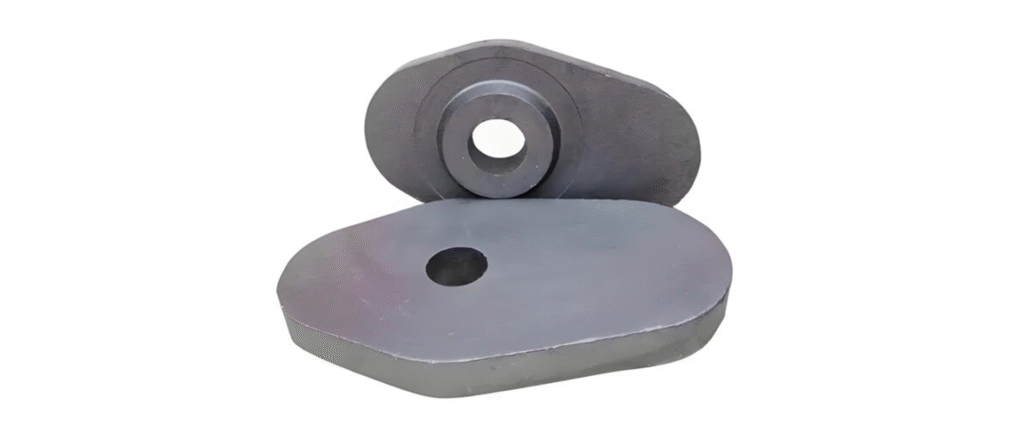
The ladle nozzle is a specially designed refractory component that is installed at the bottom of the ladle. The primary function is to regulate the release of molten steel to the tundish. As the gate between these two vessels, the ladle nozzle gives a controlled flow rate with minimum turbulence, which is required for ensuring clean steel and preventing inclusions.
In the majority of configurations, the ladle nozzle operates in conjunction with slide gate plates or stopper rods to open, control, and close the molten steel flow as needed during casting.
2. Construction and Design Characteristics
Ladle nozzles are specifically designed to endure the harsh conditions of steel making. They typically consist of:
- Outer steel casing for structural strength.
- Refractory insert of high-quality material to be resistant to high temperature and corrosive slag.
- Internal bore with geometrical optimization to control flow and minimize erosion.
Nozzle bores are manufactured in various diameters according to steel quality, casting speed, and product specification. For some designs, replaceable inserts are offered to extend the service life without the necessity to replace the entire assembly.
3. Materials and Properties

A ladle nozzle’s effectiveness largely depends on the materials employed for refractories. Common materials are:
1- Alumina-Carbon (Al₂O₃-C):
It provides superior thermal shock resistance and mechanical strength, and refractories containing zirconia:
It can withstand superior corrosion from molten steel and slag.
2- Magnesia refractories:
Best suited for high-temperature resistance.
The main characteristics of a good-quality ladle nozzle are:
- Superior resistance to erosion and corrosion.
- Resistance to thermal shock due to sudden temperature changes.
- Consistent dimensional accuracy for smooth fit and performance.
4. Operational Role in Continuous Casting
In continuous casting, the regulation of the flow of molten steel by ladle nozzles is essential to:
- Maintain a stable steel level in the tundish.
- Ensure uniform casting speed for better product uniformity.
Ladle nozzles in modern steel mills are typically linked with automatic slide gate systems for online flow control, improving efficiency and reducing manual intervention.
5. Typical Challenges and Failure Modes
Despite their robust design, ladle nozzles are susceptible to several operating challenges:
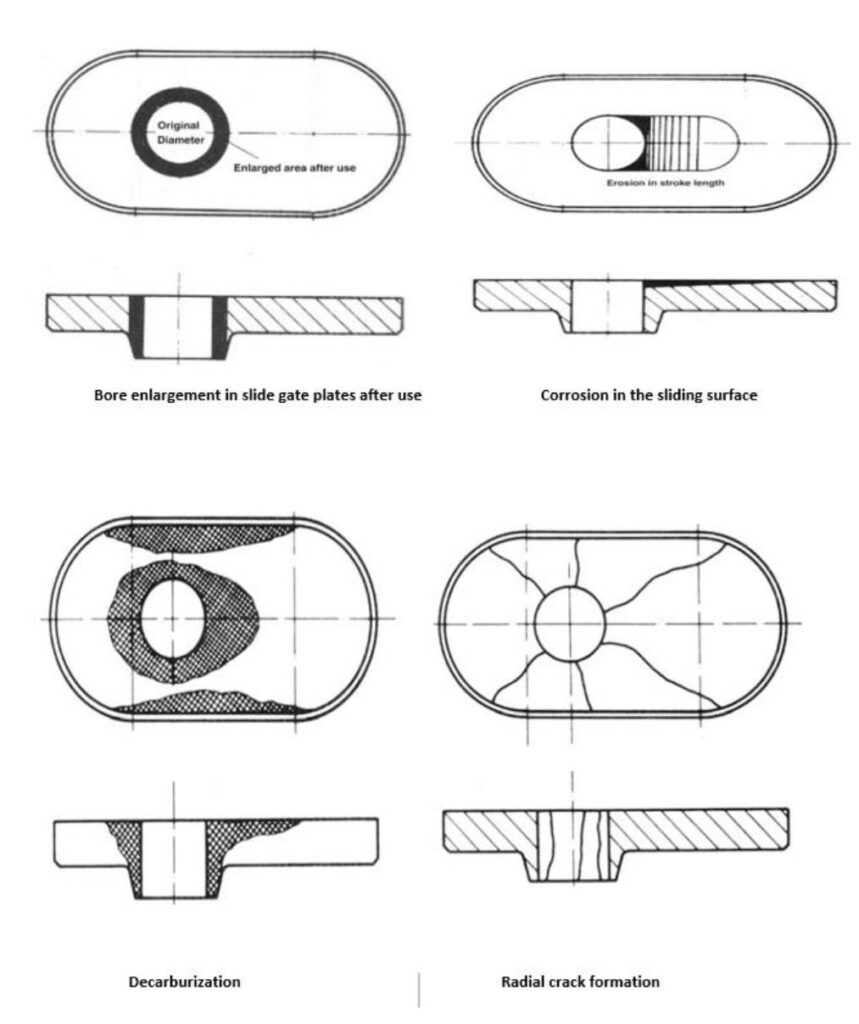
Erosion and Wear: Progressive wear of the bore due to frequent exposure to high-velocity molten steel.
Clogging: Restricted flow and casting disruption by solid inclusions or alumina depositions within the nozzle.
Thermal Shock Damage: Instant exposure to temperature changes can result in cracking or structural damage.
Ladle nozzle failure can lead to costly production shutdowns, unsafe working conditions, and defects in the finished steel product.
6. Developments in Ladle Nozzle Technology
Recent technological advancements have extended the life and dependability of ladle nozzles. Some of these developments are
- High-density zirconia-based inserts for greater erosion resistance.
- Optimized bore geometries to reduce turbulence and improve steel cleanliness.
- Gas purging systems integrated into nozzle assemblies to prevent clogging.
These innovations are intended to reduce maintenance, improve casting stability, and enhance steel quality.
Conclusion
The ladle nozzle is more than a pipe for molten steel, and it is a vital subsystem with direct impact on casting efficiency, product quality, and plant safety. By choosing higher-performing nozzles, correctly maintaining them, and maximizing the use of new technologies, steelmakers can achieve significant improvements in operating performance.
Hyre offers precision-manufactured ladle nozzles for longer life, consistent flow, and better wear resistance. Carefully chosen material and design can give a ladle nozzle to deliver trustworthy, consistent performance even in steelmaking’s toughest conditions.