Refractories are heat-resistant materials used to line furnaces, kilns, reactors and other high-temperature processing units in industries like steel, glass, cement, and nonferrous metals. These linings protect equipment, improve energy efficiency, and enable higher-temperature and more intensive processes. Globally, refractory consumption is enormous – on the order of 35–40 million tonnes per year. The iron and steel industry alone consumes roughly 60–70% of all refractories, with cement, glass, petrochemical, and other sectors making up the balance. Given this critical role, the leading refractory producers have an outsized impact on industrial productivity, cost-efficiency, and sustainability. The following sections profile the five largest refractory manufacturers – RHI Magnesita, Vesuvius, Saint-Gobain (Refractories), Shinagawa Refractories, and IFGL Refractories – covering each company’s history, product focus, global reach, innovations, market positioning, and competitive strengths.
RHI Magnesita
Background: RHI Magnesita (headquartered in Vienna, Austria) is the world’s largest refractories supplier, formed by the 2017 merger of Austria’s RHI AG and Brazil’s Magnesita. The company traces its roots to early 20th-century magnesite mining, and today touts itself as “the global leader in refractories”. RHI Magnesita is listed on the London Stock Exchange (FTSE 250) and employs around 15,000 people. It has grown through numerous acquisitions and vertical integrations (including its own mining operations) – giving it “the highest level of vertical integration in the industry with unique mineral sources and 50%+ self-sufficiency in all raw materials”. For example, it owns magnesia and dolomite mines, and operates 35 production sites and 10 main raw-material sites worldwide (producing roughly 3 million tonnes of refractories annually). RHI Magnesita claims about 15% of global refractory market share and leadership across Europe, the Americas, the Middle East and other regions.
Product Focus: RHI Magnesita offers a full range of high-grade refractory products and systems for steel, cement, glass, nonferrous metals and other industries. Its portfolio includes fused and dead-burned alumina bricks, magnesia-carbon bricks, high-purity zirconia refractories, silica bricks, monolithic (castable) refractories, insulating materials, precast shapes, and specialty products (e.g. hot repair mixes). RHI Magnesita emphasizes turnkey solutions: linings, gunning equipment, installation services, and monitoring technologies to optimize furnace performance. For steelmaking, for example, it provides linings and flow-control systems for converters, ladles, electric-arc furnaces and continuous casters. In cement, it supplies entire kiln lining packages and related mechanical and digital services. The company also markets digital tools (such as its e-tech slag-management platform and VISIR ladle hot-spot detection system) and automation equipment (e.g. robotic gunning systems) as part of its innovation push.
Global Footprint: RHI Magnesita has the largest physical footprint of any refractory maker, with manufacturing sites on every continent. Its roughly 35 plants and raw-material sites span Europe, the Americas, Asia, the Middle East and Africa. The company supplies over 50 countries through a network of sales offices and engineering centers. Such a broad footprint allows RHI Magnesita to serve major steel and cement clusters locally, ensuring just-in-time delivery and rapid technical support. In 2025 it completed the acquisition of Resco Group in the U.S. to strengthen its North American alumina-refractories capabilities, and it has continued expanding in India, Turkey and other growth markets.
Key Innovations: RHI Magnesita invests heavily in R&D to maintain its technology leadership. Key areas include sustainability (low-carbon refractories), digitalization, and process automation. It has developed lower-carbon castables and resin-bonded bricks, and pioneered circular-economy solutions (recycling spent refractories back into new raw material). Its in-house innovations include the ANKRAL LC Series low-CO₂ bricks and the CircoCheck quality-control machine. On the digital side, RHI Magnesita’s e-tech platform for steel operators (optimize slag foaming, etc.) and its Lining Evaluation Scan (fast 3D scanning of linings) exemplify its data-driven approach. RHI Magnesita also co-developed fully-automated refractory application equipment (like the Terminator XL gunning robot) to improve safety and consistency. In short, the company leverages its resources to “lead the industry’s innovation” in high-temperature linings.
Market Position & Advantages: As the established #1, RHI Magnesita’s strengths include unparalleled scale, an integrated supply chain, and a comprehensive portfolio. Its vertical integration (own mining through finishing) ensures reliability of raw materials even in tight markets. Its scale enables high-volume global logistics and cost efficiency. The company’s 4PRO® service contracts (covering maintenance, relines, engineering) strengthen customer relationships. RHI Magnesita is often the sole global partner able to supply coordinated refractory and equipment solutions to multinational steel mills. The company emphasizes reliability (quality and on-time delivery) and technical support as competitive edges. Its large, cross-border R&D network and patent portfolio further entrench its leadership. In summary, RHI Magnesita’s competitive advantage rests on being the most global, fully integrated refractory supplier with broad solution capabilities (bricks, monolithics, automation, services), positioning it as the “driving force of the refractory industry”.
Vesuvius
Background: Vesuvius plc (headquartered in London) traces its heritage to the Cookson Group and has roots in lead, glass and metal engineering dating back to the 17th century. Today it is a standalone company focused on “molten metal flow engineering” and consumable products, listed on the LSE. Vesuvius employs over 11,000 people (including 6,000 in Asia-Pacific). Its business is split into four segments: Steel Flow Control, Steel (Advanced) Refractories, Technical Services (Digital) and Foundry Technologies (Foseco brand). Vesuvius’s origins in refractory products stem from acquiring brands like Foseco (2008) and Sidermes (2015), and through joint ventures. The company is the evolution of Cookson Group’s refractories and foundry divisions. In 2012 Cookson spun off its refractories-related businesses as the renamed Vesuvius.
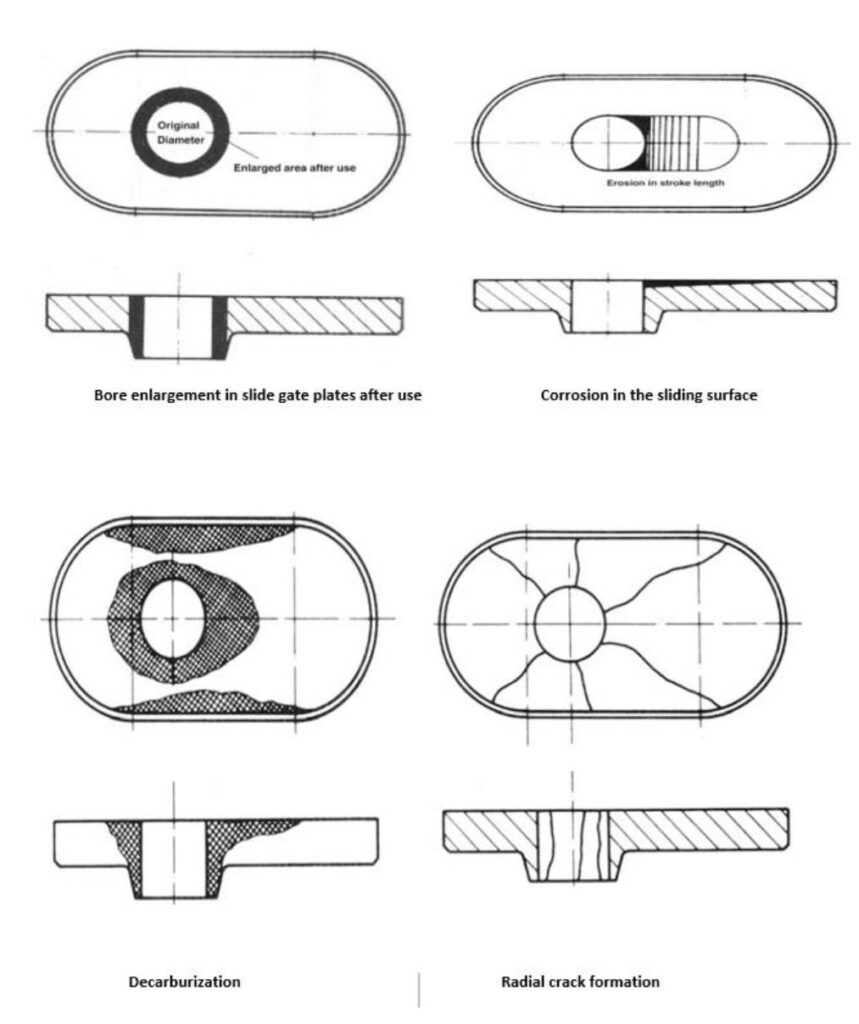
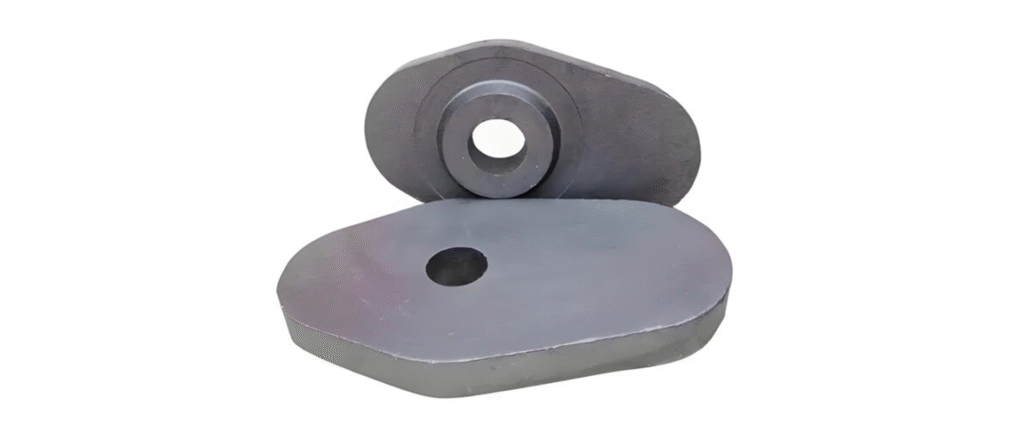
Product Focus: Vesuvius is best known for metal flow and refractory solutions in steelmaking and foundry. Its Flow Control products (e.g. slide-gate nozzles, stoppers, lids) are used in continuous steel casting to precisely regulate metal flow and prevent contamination. The Advanced Refractories division supplies high-performance linings for blast furnaces, ladles, tundishes and electric-arc furnaces. These include monolithic castables, insulating bricks, and shotcretes formulated for extreme thermal and slag-corrosion resistance. Vesuvius also offers Foundry Consumables (via Foseco) such as mold/ core coatings, filters, and fluxes to improve molten metal quality in casting. Recently it has launched digital service tools that capture process data (e.g. process management systems). In summary, Vesuvius’s products range from traditional refractories (bricks, mixes) to flow-control hardware and specialty foundry consumables – all engineered to improve safety, yield and efficiency. In its own words, Vesuvius develops “customised refractories, systems, services and technologies” to make processes safer and more efficient.
Global Footprint: Vesuvius operates worldwide, with roughly 54 production sites across 40 countries, supported by 75 sales offices and 6 R&D centers. It serves customers in 6 continents, adapting products locally (e.g. India, China operations covering Asia). The company locates manufacturing close to steel and foundry customers (for cost and speed) and embeds technical experts at major plants. Vesuvius’s 2024 report emphasizes its “worldwide presence” through local plants and global tech centers. Strategic acquisitions have also expanded its footprint: in 2025 Vesuvius acquired Turkey’s PiroMET to bolster its EMEA presence. Overall, Vesuvius competes globally with a mix of owned facilities and acquired businesses, ensuring access to key markets like China, India, North America and Europe.
Key Innovations: Innovation is central to Vesuvius’s strategy. It has pioneered many refractory and flow-control technologies over the decades (e.g. ROTOLOK tundish nozzles). More recently, R&D focuses on data-driven control (Industry 4.0 for steel) and sustainability. Vesuvius has developed digital services that integrate sensor data from furnaces and flow systems, enabling predictive maintenance and process optimization. On the materials side, it continually refines monolithics and brick formulations for higher heat load and lower emissions. The acquisition of Gouda Refractories (2025) brought advanced refractory know-how in alumina-based “white” bricks for aluminum, cement and EAF, boosting its innovation base in those areas. Vesuvius also works on greener refractories and recycling initiatives. Across its businesses, R&D centers in Belgium, India, China and elsewhere collaborate on new alloys, ceramic fibers and refractory composites. In short, Vesuvius leverages its engineering expertise (especially in molten metal dynamics) to innovate at the intersection of refractories and process control.
Market Position & Advantages: Vesuvius positions itself as the technology leader in metal-flow and refractory solutions for steel and foundry. Its market strength stems from this deep process-knowledge focus and strong customer relationships. Unlike some competitors focused only on bricks or castables, Vesuvius can offer an integrated suite (from slides to linings to services). In 2024 it reported net pricing power and market share gains in flow control despite weak volumes, reflecting its differentiated value. Its advantages include: a broad global network with localized production and service teams; robust engineering support (embedding experts in mills); and strong presence in emerging markets (India, SE Asia). The 2024 results note Vesuvius’s “market and technology leadership, strong customer relationships, [and] well established presence in developing markets” as core strengths. In summary, Vesuvius’s competitive edge is its specialized know-how in flow and process control combined with a global footprint – effectively making it the go-to refractory partner for steelmakers and foundries looking for total metallurgical solutions.
Saint-Gobain Performance Ceramics & Refractories
Background: Saint-Gobain (France) is a giant in building materials and industrial solutions. Its Performance Ceramics & Refractories division (often called SG Ceramics) supplies engineered ceramics and refractories. This arm traces back to Société Européenne des Produits Réfractaires (SEPR) and the legacy Saint-Gobain Céramiques et Plastiques. Today, SG Ceramics focuses on high-performance ceramics (e.g. kiln furniture, filtration media) and engineered refractories for extreme conditions. The division emphasizes sustainability and design (“Pioneering ceramics for a better tomorrow”), aligning with Saint-Gobain’s broader decarbonization goals.
Product Focus: Saint-Gobain’s refractory product range includes bricks, castables and mortars designed for metal production and incineration. For example, they supply high-grade castables and bricks for steelmaking furnaces, and specialized refractories for waste-to-energy (WtE) and non-ferrous processes. The company also produces advanced ceramic components – high-strength alumina or zirconia ceramics used in filters, bearings and mechanical parts for industrial kilns. On their site, SG highlights “innovative refractory solutions” that improve durability and efficiency in extreme environments. Unlike pure-play refractory specialists, Saint-Gobain’s offerings span both refractories and industrial ceramics (filtration plates, kiln furniture, etc.), leveraging cross-disciplinary expertise.
Global Footprint: Saint-Gobain’s refractories arm is relatively smaller by volume but highly global. Its Performance Ceramics & Refractories has a “worldwide footprint, with 11 industrial sites” and operations on all six continents. Eight of those sites are SEPR plants, supported by sales and technical offices globally. Although Saint-Gobain’s total refractory production is under the broader corporate umbrella, this division’s 11 plants serve customers in steel, glass, cement and waste-incineration markets around the world. For example, it has major facilities in France, India, and the U.S., among others. This broad presence allows SG Ceramics to support key industries (automotive casting, industrial kilns, incineration plants) regionally and comply with local regulations. The backing of the $50+ billion Saint-Gobain group gives it a strong logistics network and R&D resources.
Key Innovations: Saint-Gobain’s refractory R&D often focuses on sustainability and performance. Its “sustainability-first mindset” leads to innovations like low-carbon refractories and lifecycle-engineered solutions. The company has developed refractories with higher recycled content and digital furnace-monitoring tools (leveraging the group’s expertise in sensors). In ceramics, SG is known for patented kiln furniture designs that improve energy efficiency. Although SG Ceramics is less quoted in refractory-only trade press, its R&D capabilties (including collaborations with parent Saint-Gobain’s materials labs) drive incremental advances – for instance, lightweight insulating bricks or smart refractories that better withstand fast cool-downs. Overall, SG’s differentiator is its combination of high-tech ceramics know-how with refractories, pushing for both performance and reduced emissions in heavy industry.
Market Position & Advantages: Saint-Gobain’s refractories segment occupies a niche at the higher end of the market: it is not a mass-volume bricks maker but a supplier of specialized, engineered products. Its advantages include the strong global brand and quality focus of the Saint-Gobain group, long-term stability (backed by diversified revenues), and a broad technology base. SG Ceramics often competes on product performance and customization for demanding applications. Its presence across both industrial ceramics and refractories can attract customers needing a single supplier for complete kiln lining systems or specialized parts. The company’s commitment to ESG (e.g. aiming for carbon neutrality by 2050) also appeals to industries under environmental pressure. In short, SG’s strength lies in engineered solutions and R&D, with competitive advantage coming from top-tier quality and the financial backing and know-how of the Saint-Gobain group.
Shinagawa Refractories
Background: Shinagawa Refractories is Japan’s largest refractory company and one of the world’s top manufacturers. Founded in 1875 (with its formal corporate start in 1901) and today part of JFE Holdings (one of Japan’s steel giants), Shinagawa has over a century of experience in refractory ceramics. In March 2025 Shinagawa closed the acquisition of Gouda Refractories (Netherlands), solidifying its global expansion. Forbes and industry sources confirm Shinagawa as “the world’s third largest manufacturer of high-performance refractories”. The company’s 2024 revenues were about ¥144 billion (≈€920M), and it employs roughly 3,300 people globally.
Product Focus: Shinagawa produces a full spectrum of refractory products. Its catalogue includes basic (magnesia-based), carbon-containing (MgO-C), high alumina, silicon carbide and silica bricks, along with monolithic castables, ramming mixes, and insulating refractories. These serve applications in steel (BOF/EAF linings, ladles), cement (kiln linings), nonferrous (alumina & copper smelters), and incineration. The company also makes specialized ceramic fibers and insulating materials. A recent product line, AdaptMelt, addresses metal-casting processes – offering bricks and linings optimized for induction and channel furnaces in foundries. Shinagawa emphasizes refractory solutions that improve thermal efficiency and scrap usage in metal recycling. Its reputation is built on extremely high-quality, high-purity refractories required by modern steel and specialty-metal producers.
Global Footprint: Shinagawa has expanded well beyond Japan. It operates manufacturing plants in Japan, China, Indonesia, Australia, the USA and Brazil, covering Asia, Oceania and the Americas. Historically, Shinagawa’s international presence included joint ventures and greenfield plants, but recent M&A accelerated its reach: besides Gouda (Europe), it acquired Saint-Gobain’s Brazilian refractory arm and U.S. ceramic brick maker in late 2022. Through these moves, Shinagawa now effectively has a global network covering five continents. Its facilities are strategically located near steel and cement complexes (e.g. its Indonesian plant near steelworks, U.S. plant in Ohio for automotive steel). Shinagawa’s parent (JFE) affiliation also opens distribution channels into Japan’s huge steel market. In sum, Shinagawa combines deep Japanese technology with a progressively global footprint – all aimed at serving major foundries, steel mills and recycling centers worldwide.
Key Innovations: Innovation at Shinagawa focuses on product performance and efficiency. Given its Japanese heritage, the company is renowned for very high-quality, precisely controlled refractories. Its 150-year history includes developing advanced processes for material purity and consistency. More recently, Shinagawa highlights innovations like the AdaptMelt series for energy-efficient scrap melting. It also actively develops ceramic fiber modules (for heat insulation) and next-gen nozzles for clean steel casting. The company has R&D centers in Japan and overseas that work on novel formulations (e.g. nano-crystalline refractories) and refractory recycling techniques. Unlike some competitors, Shinagawa benefits from long-term product testing and tight quality control regimes, ensuring its innovations translate to higher throughput and yield for customers.
Market Position & Advantages: Shinagawa’s competitive advantage lies in its combination of premium quality, technical service, and global alliances. Its affiliation with JFE (one of the world’s largest steel firms) means deep process knowledge and captive demand in Japan, while allowing scale economies. Shinagawa’s brand is strong in Asia, and growing in Europe/North America via recent acquisitions. The company claims market leadership in “iron, steel, energy, and cement” refractories – segments where performance and reliability justify higher costs. Shinagawa also sells insulating materials and fibers, diversifying its portfolio. The Gouda purchase gives it a unique niche in premium white (alumina-based) refractories for aluminum and petrochemical industries. In summary, Shinagawa competes as a quality leader: its refractories often command a premium for their performance, and its technical support network (largely via JFE Steel Group) reinforces customer loyalty.
IFGL Refractories
Background: IFGL Refractories (India) is one of the world’s fastest-growing refractory groups. Founded in 1979 in Kolkata (initially in collaboration with Japan’s Harima), IFGL has expanded from a single plant to a multinational group. Today IFGL Group has over 3,000 employees and serves more than 300 major steel customers globally. It is publicly listed in India and has built its identity as a technology-driven, customer-focused supplier. The group includes several subsidiaries: Monocon (UK), Hofmann (Germany), EI Ceramics (USA), and Sheffield Refractories (UK) among them. IFGL’s strategy has been to acquire niche refractory firms overseas while building greenfield plants in Asia.
Product Focus: IFGL’s offerings cover the full range of refractories, with particular strength in steel and ironmaking applications. It manufactures basic (magnesia and dolomite) bricks, high alumina bricks, carbon bricks (MgO-C), silicon carbide bricks, fused and unshaped refractories (castables, mortars, gunning mixes), and refractory cements. These products serve blast furnaces, converter linings, ladles, electric-arc furnaces, continuous casters, and more. IFGL is known for customized solutions – for example, its PRIME® monolithics and precast shapes designed for Indian steel mills. The group emphasizes advanced process engineering (customer-site technical services) and quick delivery. IFGL also serves the foundry sector with insulating refractories and binder systems. Across all, the company highlights “pioneering innovation… setting new benchmarks for excellence and sustainability”.
Global Footprint: IFGL has built a strong global presence despite its Indian base. The group now has 10+ manufacturing facilities across Asia (India, China, Vietnam), Europe (Germany, UK) and North America (USA). It serves customers in 50+ countries through direct sales offices and distributors. Key overseas units include an alumina-brick plant in Germany (Hofmann), a silica brick plant in the UK (Monocon), and a bonded refractories plant in Ohio, USA. IFGL’s plants are typically situated near major steel or cement hubs to minimize logistics. By aligning its global reach with key markets, IFGL offers competitive lead times. The group’s “state-of-the-art manufacturing facilities” and international footprint create “a valuable competitive edge towards pricing and delivery time”. In short, IFGL is truly global – an Indian-origin company with local manufacturing and support networks spanning Asia, Europe and the Americas.
Key Innovations: IFGL emphasizes R&D and collaboration to stay at the technological forefront. Its in-house research center (the Industry 4.0 Lab) develops new refractory formulations and processes. The company highlights “continuous technological advancements and process improvements”. Examples of innovation include low-cement castables for cleaner steelmaking and performance-tuned fiber modules for hot-face liners. IFGL has also focused on digitalization (ERP, quality-tracking) to improve plant efficiency. Being originally an Indian firm, it has invested heavily to match global R&D standards – hiring experts and forming technical partnerships in Europe and Japan. This strategy is encapsulated in IFGL’s tagline of “pioneering innovation in the global refractories industry”. While not as famous for patents as the top two players, IFGL’s agile R&D lets it quickly tailor products to evolving customer needs (e.g. refractories optimized for new steel chemistries or higher scrap rates).
Market Position & Advantages: IFGL is a rising contender in refractories, especially in Asia. Its strengths include cost competitiveness (lower manufacturing costs in India), a global supply chain (through its subsidiaries), and a customer-centric culture. By focusing on serving steelmakers (over 300 global steel plants) and by locating plants near major customers, IFGL can often outcompete regional suppliers. Its acquisitions (UK and German companies) gave it access to specialized technologies (for example, sophisticated natural-diamond drilling tools in its UK arm). The group underscores its agility and service – “swift responsiveness and responsibility” – as competitive advantages. Furthermore, IFGL’s partnerships (e.g. joint venture with Harima, tie-ups in China/Vietnam) enhance its raw material and tech access. In summary, IFGL’s unique position is a blend of global scale with cost efficiency: it offers Western-quality refractories and engineering at Indian-origin prices, aiming to be the low-cost innovator in markets like steel, cement and casting.
Comparative Strengths and Industry Contributions
The five manufacturers profiled above each bring distinctive strengths to the refractory sector:
- RHI Magnesita leads in scale and integration. Its advantages are the breadth of products (high-grade to standard refractories, plus digital tools), global reach (35+ sites on every continent), and vertically-integrated supply chain. RHI’s contributions include pushing low-carbon refractories and circular-economy initiatives at industry scale, and demonstrating how a single supplier can coordinate worldwide steel and cement projects.
- Vesuvius excels in process expertise. Unlike RHI’s broad product line, Vesuvius focuses on high-value flow-control and foundry technologies. Its innovation is in engineering (custom slide-gates, smart ladle systems) and in aligning refractory design closely with metallurgical process needs. Vesuvius’s strength is deep technical service and a tailored approach, supplying not just materials but metallurgical know-how to the steelmaking process.
- Saint-Gobain (Refractories) contributes through specialized engineered solutions. As part of a larger materials group, SG brings advanced ceramics into the mix and emphasizes sustainability-driven design. Though smaller in volume share, its impact is felt in niches requiring highest-quality linings or insulating shapes (e.g. advanced waste-to-energy plants, specialty metal furnaces). SG’s global footprint is modest (11 plants worldwide) but its backing of a major international conglomerate assures continuous R&D investment.
- Shinagawa Refractories stands out in quality and tradition. With over 150 years of history and ties to JFE Steel, Shinagawa’s brand is synonymous with high-performance refractories in steel and nonferrous. Its competitive advantage is premium product quality and technical service (rooted in Japanese manufacturing discipline), now being coupled with global expansion. Shinagawa’s recent growth (Gouda acquisition, etc.) shows its goal to translate that quality leadership into a full-fledged global player.
- IFGL Refractories is the emerging challenger. It brings the combination of Western technology and Indian cost-base, rapidly scaling up through strategic acquisitions. Its contribution is bringing new competition and innovation speed from Asia. IFGL’s focus on quick customization and global service (via its international facilities) adds pressure on traditional players’ margins. As an agile, fast-growing firm, IFGL pushes the industry toward quicker product development and broader global supply.
Collectively, these top five firms ensure that modern high-temperature industries have access to reliable and advanced linings. Each contributes to raising refractory standards: RHI and Vesuvius by setting benchmarks for product breadth and process integration; Saint-Gobain through ceramics expertise and sustainability focus; Shinagawa by exemplifying ultra-high quality; and IFGL by driving growth and access, particularly in Asia. For steel, cement, and glass producers making purchasing or partnering decisions, these companies represent the spectrum of options – from turnkey global solutions to specialized technical excellence – thereby shaping the future of refractory technology.