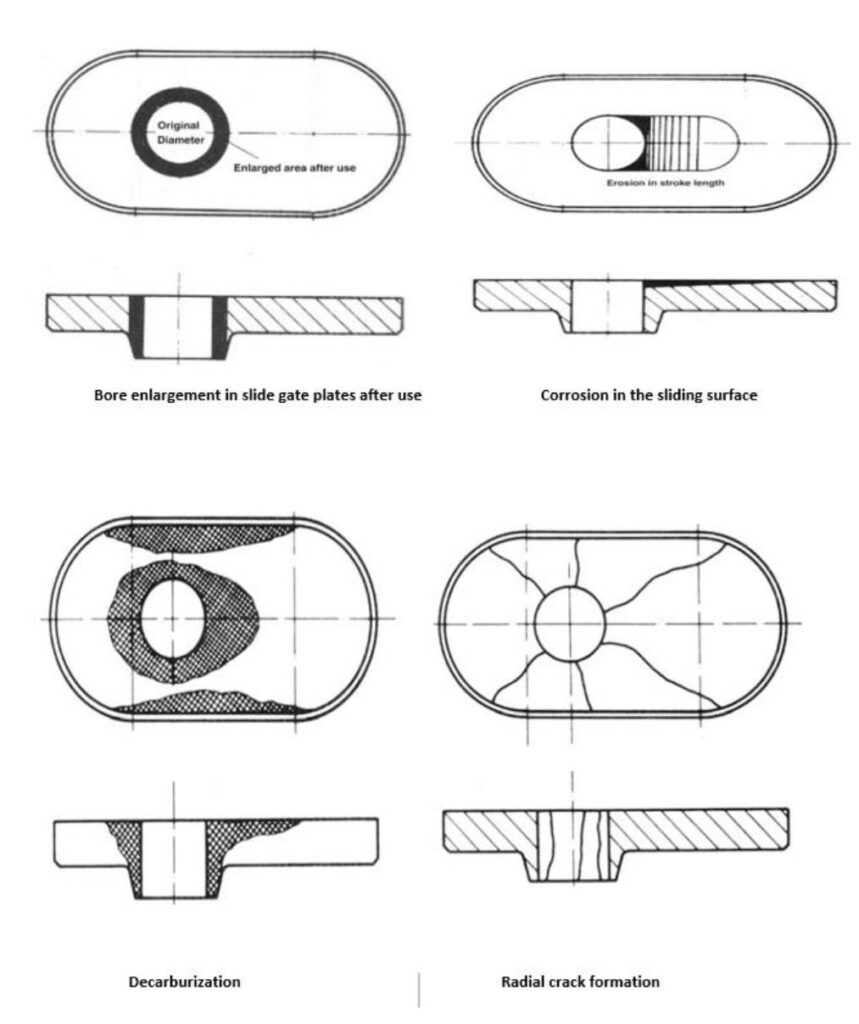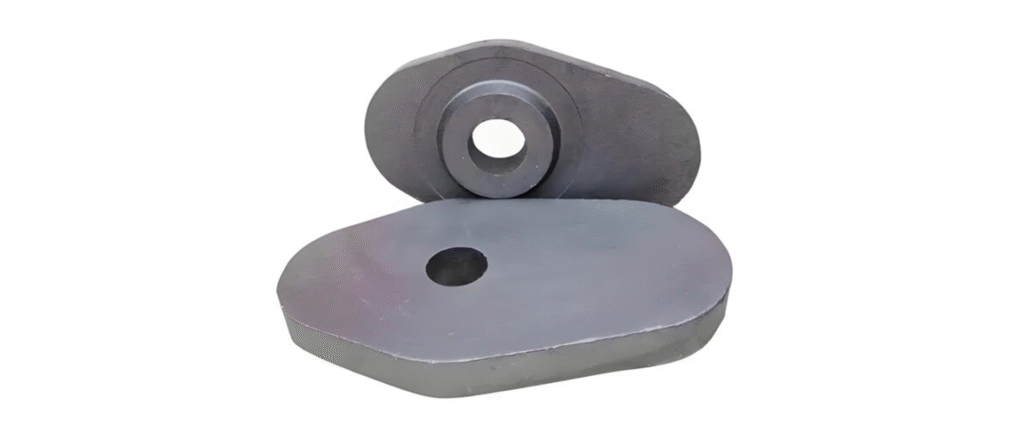
Abstract
In continuous casting steelmaking, the tundish has evolved from a simple intermediate vessel into a critical metallurgical reactor that directly influences steel cleanliness, casting stability, and product quality. The performance of the tundish depends heavily on a series of functional refractory components, including ladle shrouds, stopper rods, seating blocks, tundish nozzles, and flow-control devices. These refractories operate under severe thermal, chemical, and mechanical conditions while fulfilling precise metallurgical and operational functions.
This white paper provides a comprehensive technical analysis of the key refractory items used in and around the tundish system. It covers functional roles, material systems, design principles, degradation mechanisms, and system-level integration. Emphasis is placed on ladle shrouds, stopper rods, and seating blocks as critical safety and performance components. The paper also discusses current technological trends and future development directions for tundish refractories in high-quality steel production.
1. Introduction
Continuous casting has become the dominant process for steel solidification due to its high productivity, energy efficiency, and improved product quality. Within this process, the tundish serves as the essential link between the ladle and the mold. Beyond its basic role as a buffer vessel, the tundish is responsible for:
- Distributing molten steel to multiple strands
- Stabilizing flow and temperature
- Promoting inclusion flotation
- Preventing reoxidation and secondary contamination
To meet these demanding requirements, the tundish relies on a complex refractory system composed of permanent linings, working linings, and functional refractories. Among these, functional refractories—such as ladle shrouds, stopper rods, seating blocks, and nozzles—play a decisive role in controlling molten steel flow and protecting steel cleanliness.
As steel grades become cleaner and casting sequences become longer, the technical demands placed on tundish refractories continue to increase. This white paper focuses on these functional refractory components and their integration into a reliable tundish system.
2. Overview of Tundish Refractory Systems
Tundish refractories can be broadly divided into three categories:
- Permanent lining – Provides structural integrity and thermal insulation
- Working lining – Directly contacts molten steel and slag
- Functional refractories – Control flow, protect steel quality, and ensure operational safety
Functional refractories are typically pre-shaped, precision-manufactured components with strict dimensional and material requirements. Their failure can result in casting instability, steel quality defects, or even catastrophic accidents.
3. Ladle Shroud
3.1 Function and Metallurgical Significance
The ladle shroud is a tubular refractory installed between the ladle slide gate and the tundish. Its main purpose is to create a fully protected steel transfer system, preventing direct contact between molten steel and atmospheric oxygen.
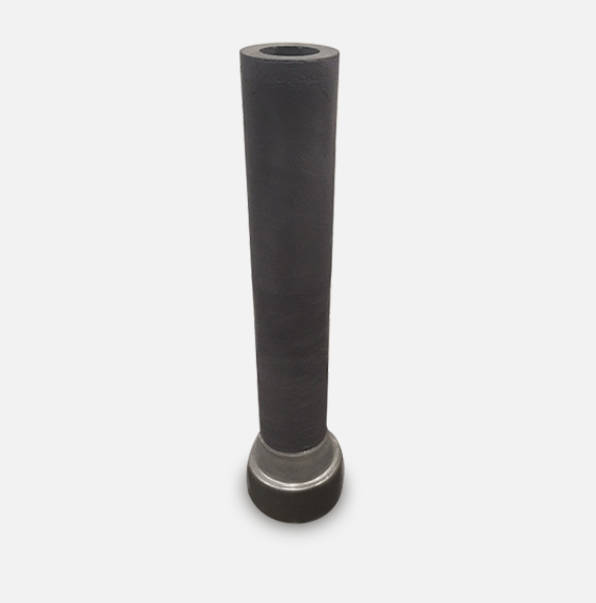
Key metallurgical functions include:
- Prevention of reoxidation
- Reduction of nitrogen and hydrogen pickup
- Minimization of non-metallic inclusion formation
- Stabilization of the steel stream
For clean steel grades, the ladle shroud is a mandatory component.
3.2 Material Systems and Design
Modern ladle shrouds are typically produced from:
- Al₂O₃–C
- Al₂O₃–ZrO₂–C
- ZrO₂–C (high-end applications)
Carbon improves thermal shock resistance and reduces steel adhesion, while zirconia significantly enhances corrosion resistance against aggressive slags and calcium-treated steels.
Design considerations include:
- Inner bore smoothness and diameter optimization
- Wall thickness balance between strength and thermal shock resistance
- Anti-oxidation coatings to protect carbon
3.3 Degradation and Failure Mechanisms
Typical ladle shroud failures include:
- Oxidation of carbon leading to strength loss
- Erosion by high-velocity steel streams
- Thermal cracking during start-up or ladle changes
- Leakage at joints due to gasket failure
Advanced shroud systems increasingly adopt integrated gaskets, optimized joint geometry, and multi-layer material concepts.
4. Stopper Rod System
4.1 Role in Flow Control
The stopper rod is the primary flow-control device in stopper-controlled tundishes. By adjusting the gap between the stopper tip and tundish nozzle, operators can precisely regulate steel flow to the mold.
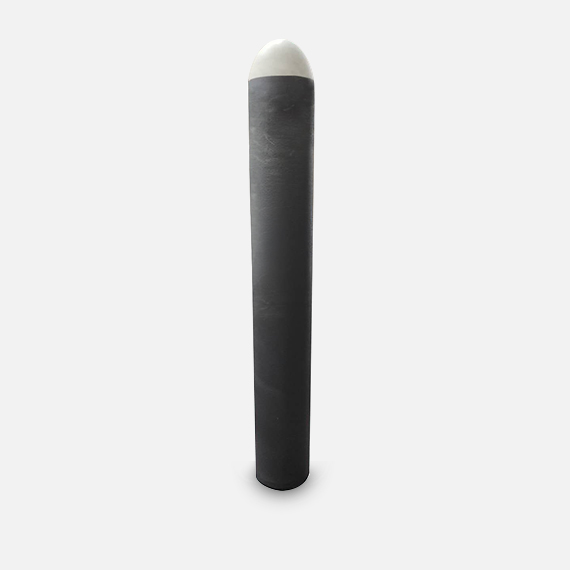
Advantages of stopper systems include:
- Fine flow control accuracy
- Rapid response to casting speed changes
- Improved mold level stability
4.2 Stopper Rod Construction
A complete stopper rod assembly consists of:
- Stopper head (tip)
- Rod body
- Insulating and protective components
The stopper head is the most critical part, directly exposed to molten steel.
4.3 Materials and Performance Requirements
Common materials for stopper heads include:
- Al₂O₃–C
- Al₂O₃–ZrO₂–C
- MgO–C (specific applications)
Performance requirements:
- High erosion resistance
- Excellent thermal shock resistance
- Low steel wettability
- Stable geometry during long sequences
The rod body is often made from dense alumina or fiber-reinforced refractories to reduce heat loss and mechanical stress.
4.4 Wear and Operational Challenges
Key issues include:
- Tip erosion causing unstable flow
- Alumina buildup and clogging
- Thermal fatigue cracking
- Misalignment with the seating block
Modern stopper rods often incorporate gradient material designs and optimized tip profiles to extend service life.
5. Seating Block
5.1 Function and Importance
The seating block is installed at the tundish bottom and serves as the mechanical and sealing interface between the tundish lining and the tundish nozzle.
Its functions include:
- Supporting the nozzle
- Ensuring precise alignment with the stopper rod
- Preventing steel leakage
Despite its small size, the seating block is a critical safety component.
5.2 Materials and Manufacturing Precision
Seating blocks are typically made from:
- High-density alumina
- Alumina–spinel composites
- Alumina–zirconia materials
Key properties:
- High compressive strength
- Excellent thermal shock resistance
- Dimensional accuracy
Machining precision, especially bore concentricity and flatness, is essential for leak-free operation.
5.3 Failure Risks
Common failure causes include:
- Thermal stress cracking
- Chemical corrosion by aggressive slags
- Leakage due to poor machining tolerance
- Uneven stopper wear due to misalignment
6. Associated Tundish Functional Refractories
6.1 Tundish Nozzle
The tundish nozzle directs steel flow from the tundish to the SEN or mold. It must resist erosion, corrosion, and clogging. ZrO₂-containing materials are widely used for improved corrosion resistance.
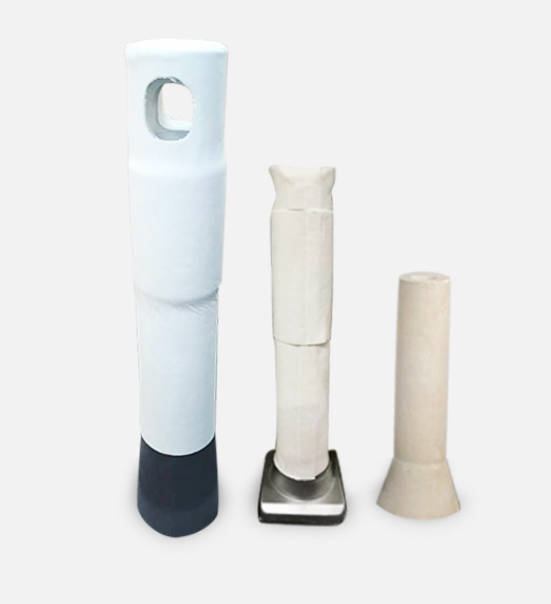
6.2 Sub-Entry Nozzle (SEN)
The SEN controls steel delivery into the mold and strongly influences mold flow patterns. Zirconia-carbon SENs dominate modern continuous casting due to their superior service life.
6.3 Impact Pads, Dams, and Weirs
- Impact pads reduce turbulence and lining erosion
- Dams and weirs control steel flow and residence time
These refractories support metallurgical functions rather than flow shut-off.
7. System Integration and Performance Optimization
The tundish refractory system must be designed as a coordinated whole. Compatibility between ladle shroud, stopper rod, seating block, and nozzle materials is essential to achieve:
- Stable casting operation
- Improved steel cleanliness
- Reduced refractory consumption
- Enhanced safety
Leading steel plants increasingly adopt system-supplier approaches, where one supplier provides and optimizes the entire tundish functional refractory package.
8. Development Trends and Future Outlook
Key trends include:
- Higher-purity raw materials
- Low-carbon and carbon-free refractories
- Anti-clogging and anti-wetting technologies
- Longer casting sequence capability
- Digital monitoring of refractory wear
Future tundish refractories will increasingly focus on clean steel production, sustainability, and total cost optimization rather than single-piece performance.
9. Conclusions
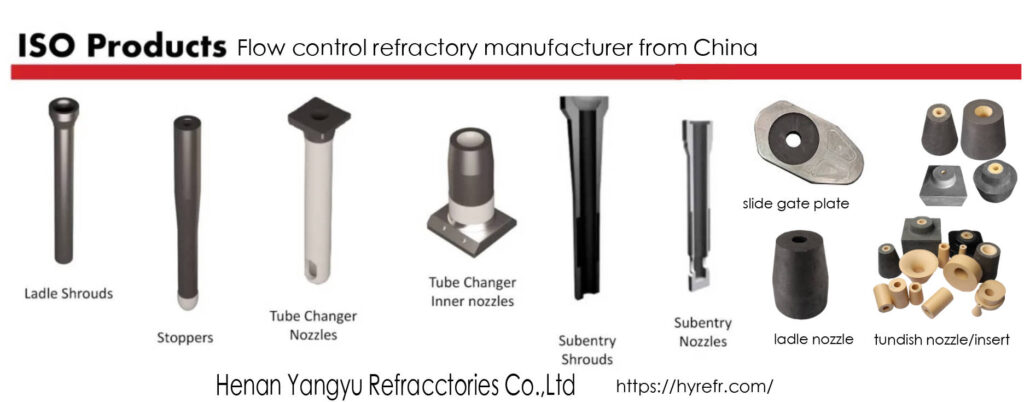
Ladle shrouds, stopper rods, seating blocks, and related functional refractories are indispensable components of the modern tundish system. Their design, material selection, and integration directly affect casting stability, steel quality, and operational safety.
As continuous casting technology advances, tundish refractories must evolve toward higher reliability, longer service life, and better system compatibility. A deep technical understanding of these components is essential for steelmakers aiming to achieve world-class casting performance.