The stopper rod is a shaped refractory product used in the continuous casting process. It stabilizes the molten steel level in the mold, controls the linear flow velocity of molten steel, and ensures the surface and internal quality of cast slabs. In actual production, the stopper rod plays a crucial role in maintaining the stability of steelmaking operations. When problems occur—such as erosion, fracture, or buildup—significant mold level fluctuations may result. In severe cases, the caster may be forced to shut down prematurely or pulled offline, causing major operational disruptions.

1. Analysis of Stopper Rod Fracture Issues
A slab caster in a steel plant frequently experienced stopper rod breakage during casting, seriously affecting normal production. Statistical analysis showed that 20% of failures occurred during tundish baking or at the start of casting, where the stopper head fell off. In other cases, the stopper head fell during casting or the rod fractured 650–700 mm below the upper shoulder, with the fracture surface showing a “V-shaped” pattern (see Fig. 1).

In 2021, 12 stopper-rod-related accidents occurred—an average of once per month. Each incident led to an unplanned caster shutdown, requiring tundish re-baking, standby equipment, and restart, disrupting production planning. Therefore, solving stopper rod issues became urgent to stabilize casting and reduce operational costs.
Based on statistical classification of failures, the main factors influencing stopper rod fracture or stopper head detachment were identified as thermal shock, mechanical strength, and design/installation deficiencies.
2.1 Thermal Shock Issues
Analysis of the stopper rod body, stopper head material design, and manufacturing process indicated that the currently used stopper rod materials generally met process requirements. The plant mainly casts carbon structural steel, high carbon steel, and some medium-carbon alloy steels, which have relatively low erosion on the stopper rod. The stopper rod is designed without a slag line and shows minimal erosion at the head; under normal 15-hour casting, the stopper head maintains good flow control and uniform erosion. Material selection is therefore basically reasonable.
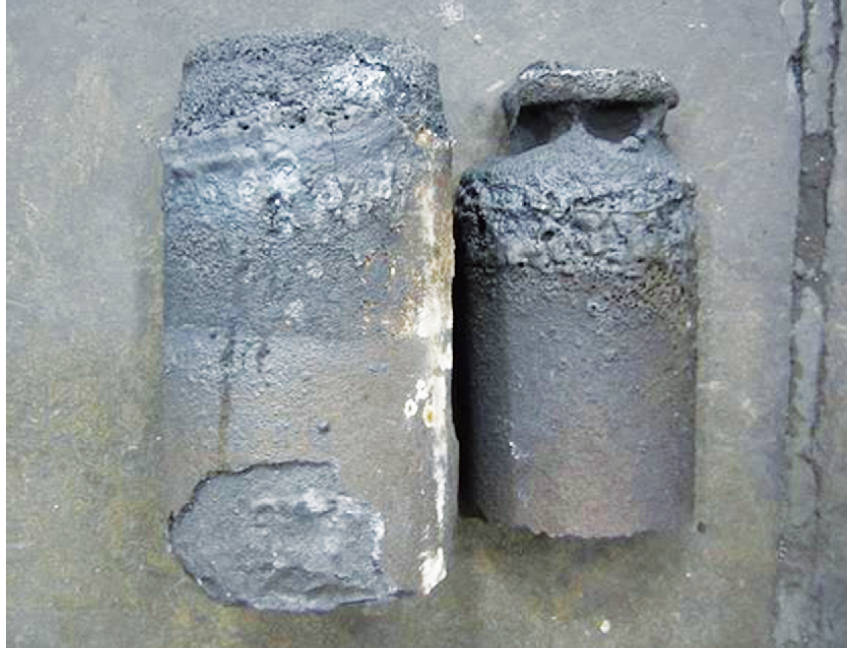
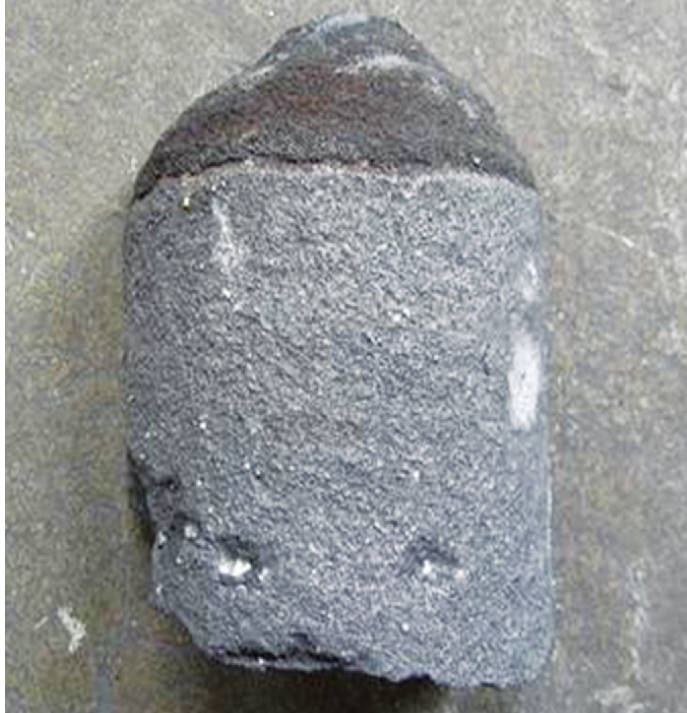
However, fracture surfaces of detached stopper heads were located 50–60 mm from the tip, with smooth and flat fracture surfaces. This suggests a manufacturing problem requiring improvements in process control. Non-uniform distribution of raw material components during production leads to stress development, which is a direct cause of stopper rod fracture.
Field investigation of tundish baking revealed low baking efficiency. The tundish uses converter gas for baking (heat value ~1300 × 4.1868 kJ/m³), with a baking time of 3 hours. During baking, the stopper rod remains open, and baking temperature is ~1000°C. The tundish is not sealed during baking, and flame leakage is severe. Poor baking results in uneven thermal stress within the refractory material of the stopper rod, causing micro-cracks. Since the stopper rod operates under extreme conditions during casting, even small defects can become magnified.
2.2 Mechanical Strength Issues
Fractures occurring at the slag-line region often appear after 1–2 heats following a nozzle change, after bonding recovery, or during quick tundish changes. Analysis indicated that when the stopper rod closes during casting, lateral and vertical forces create cracks that may eventually lead to fracture.
Evaluation of the stopper rod body strength showed that its hot-state mechanical strength is relatively low. Under molten steel impact or mechanical loading, the rod is prone to cracking. Strength enhancement is therefore necessary.
2.3 Stopper Rod Design and Installation Issues
Field tracking of stopper rod installation revealed the following:
Design problem:
When fully open, the stopper protrudes 200 mm above the tundish cover, although normal design allows only ~50 mm.
Excessive length significantly increases external loading during emergency closure.
The slag-line region, where diameter transitions occur, is especially weak and prone to fracture.
Installation problem:
Installation is done offline. During tundish transport, vibration may damage the rod.
“Bite-head” misalignment occurs during installation, creating lateral forces during closure.
During casting, operators switch from automatic to manual mode and forcefully push the lever to close the stopper, aggravating mechanical damage.
3. Improvement Measures
3.1 Stopper Rod Material and Structure Improvement
To address these problems, the following changes were implemented:
Material optimization:
Introduce fine SiC powder into the mix, focusing on the stopper head and slag-line areas.
Adopt composite structural design to enhance overall mechanical properties and reduce thermal expansion.
With 5% SiC addition, the cold and hot MOR values of magnesia-carbon stopper head material reached 8.2 MPa and 9.4 MPa respectively; average thermal expansion coefficient: 7.1 × 10⁻⁶/°C; no visible cracks after 3 cycles at 1100°C.
Stopper length adjustment:
Current rod length: 1750 mm → reduced to 1650 mm.
Shorter length reduces fabrication difficulty and decreases bending stresses from molten steel flow.
Stopper head optimization:
Change head shape from spherical to conical for improved flow control precision.
Reduce head size from 60 mm to 45 mm.
3.2 Installation Process Improvement
Change from offline installation to online installation before tundish baking, minimizing vibration-induced damage.
Ensure the opening–closing device beam is straight and the stopper rod is properly aligned.
Eliminate “bite-head” misalignment to prevent lateral forces during operation.
3.3 Optimization of Tundish Baking Procedure
Seal the tundish edge before baking to improve thermal efficiency.
Keep stopper rod closed at the start of baking; open after ~30 minutes to improve head baking uniformity.
Revise baking procedure to define optimal baking time.
Avoid prolonged baking or fire interruption.
Strictly control gas valve opening to ensure temperature reaches >1000°C within 1–2 hours.
3.4 Improvements in Opening and Casting Operation
Replace “observe rod during baking” habits with a pre-casting shutdown followed by stopper rod alignment check.
During nozzle change, bonding recovery, and quick tundish change:
Switch to manual mode.
Let stopper close under its own weight, then gently press the lever to complete closure.
4. Implementation and Results
The improvement plan was implemented in two phases:
Optimization of tundish baking, sealing, installation, and operating procedures.
Stopper rod redesign and trial production followed by industrial trials using grades including Q235, Q345, 45#, and 50#.
Observations showed uniform erosion and good flow control. After implementation, stopper rod fracture incidents significantly decreased:
2021: 12 incidents → 2022: only 2 incidents
Operational stability greatly improved.
5. Conclusion
By adjusting additive composition and optimizing stopper rod geometry, thermal stability and flow-control accuracy can be effectively improved.
Enhancements in installation, baking procedures, and operation reduce thermal shock and mechanical damage, significantly improving stopper rod reliability and ensuring stable tundish performance.