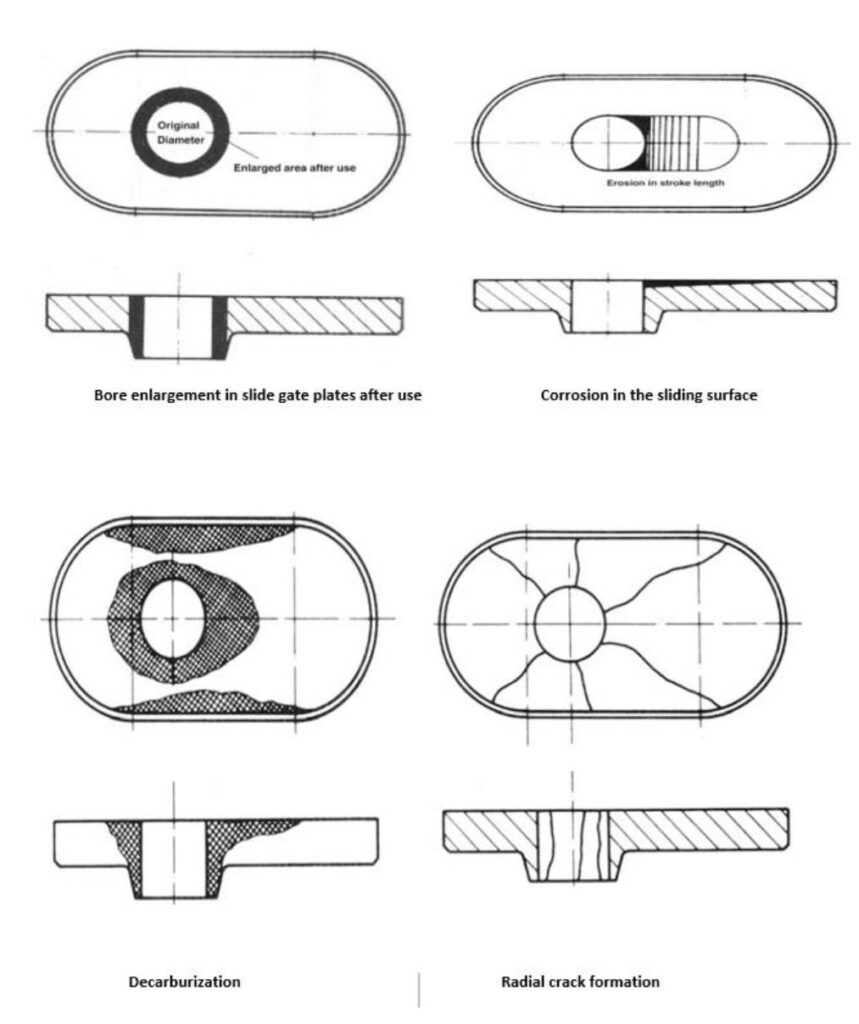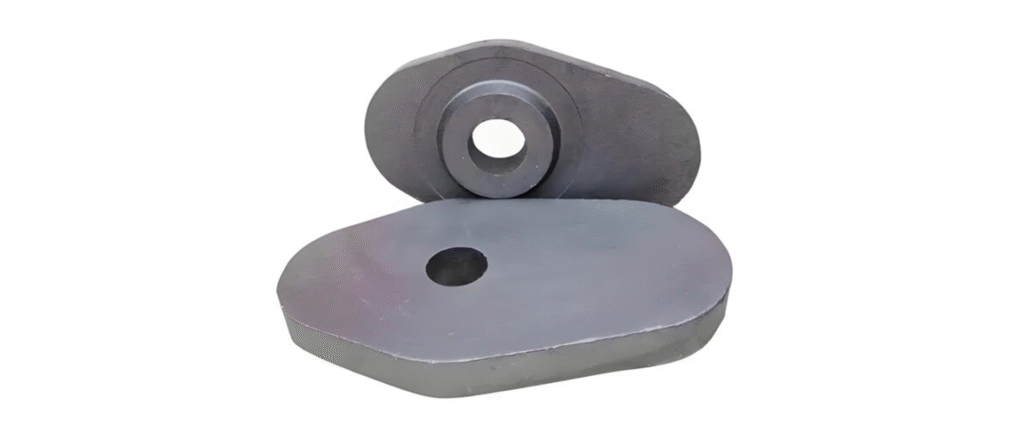
Abstract:Sub Entry Nozzle clogging is a prevalent issue in continuous casting. It not only disrupts casting stability but escalates into nozzle blockagein severe case, resulting in decreased production efficiencyand slab quality deterioration. The composition and structure of clogging deposits for typical steel grades were summarized. The mechanisms of submerged entry nozzle clogging were reviewed from three aspects: the physical adhesion ofinclusions, chemical reactions in steel refractory system, and the temperature drop resulted from the insufficient preheating.Chemical reactions were emphasized, including decarburization reactions, interactions between molten steel and refractory, and reoxidation reactions. Additionally,the discussion extended tonumerical simulation studies in regard to nozzle clogging, mainly including flow field simulations and model of inclusion motion. Finally, the prevention strategies against nozzle clogging were discussed: the cleanliness improvement of steel, the argon blowing technique,the optimization of SEN parameters, and the external electric field and magnetic field treatment.
Keywords:continuous casting;nozzle clogging;SEN;clogging mechanism;inclusion.
1. Overview of SEN Clogging Phenomenon
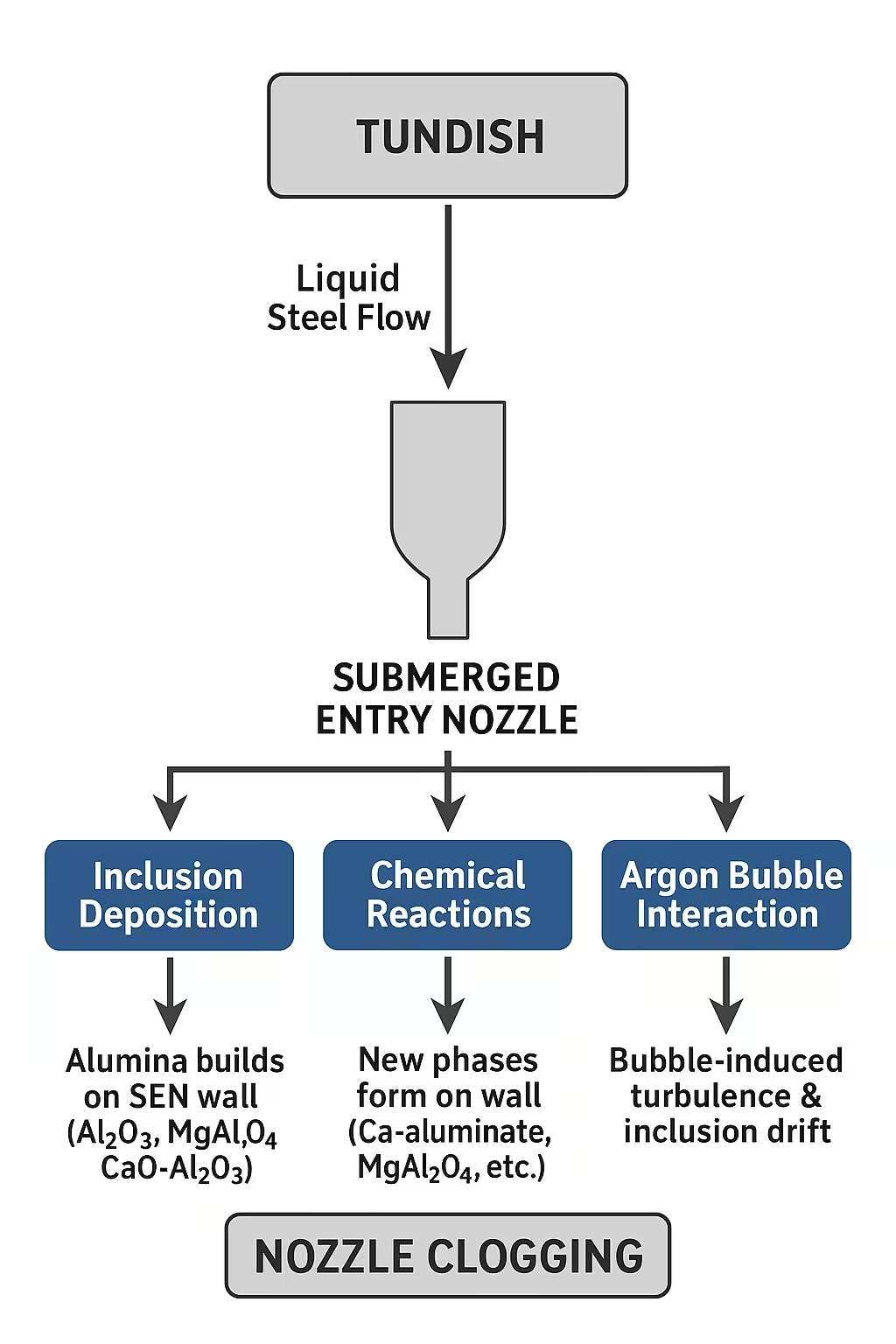
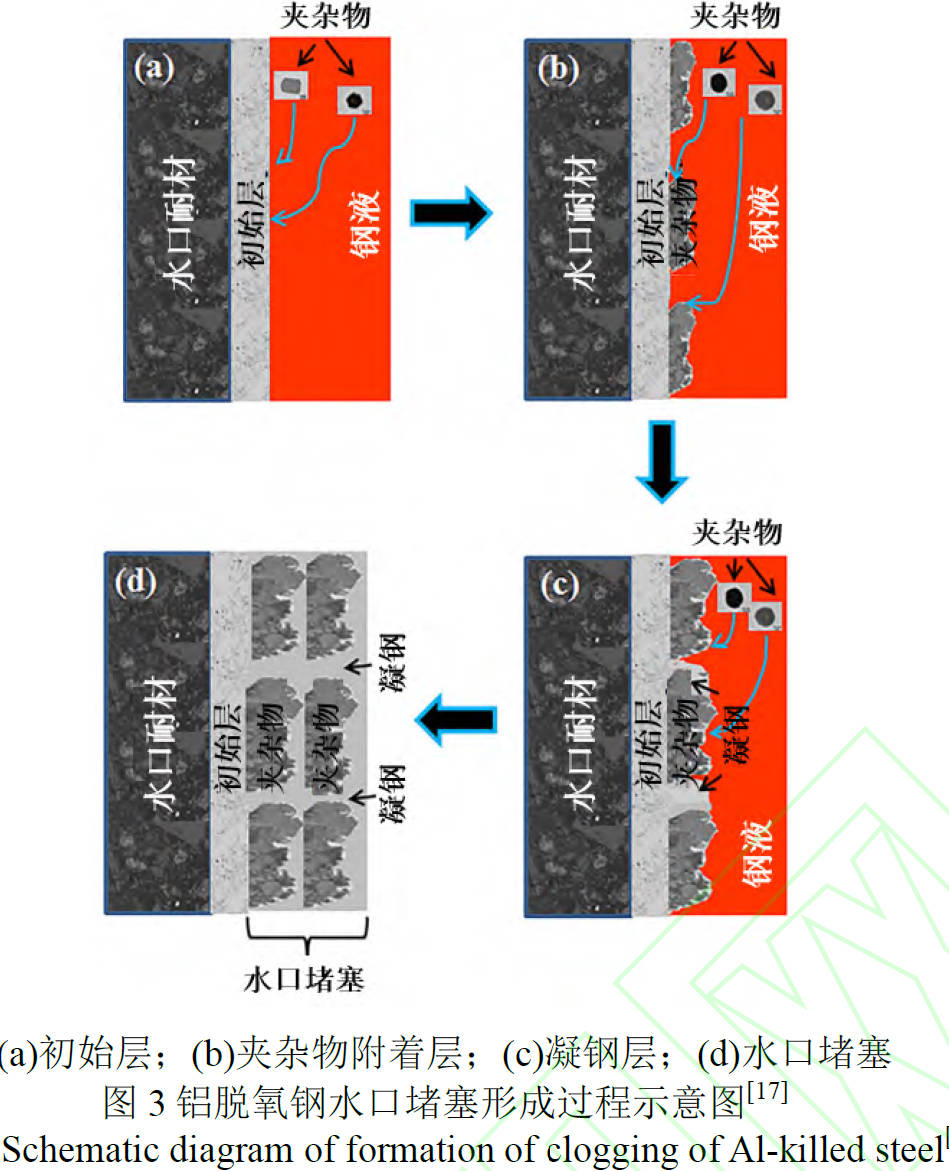
SEN clogging refers to the gradual accumulation of solid or semi-solid deposits inside the nozzle bore during continuous casting. These deposits reduce flow area, alter jet characteristics, and increase the probability of mold level fluctuations and breakouts. Clogging typically results from chemical reactions, physical deposition, and interactions among molten steel, inclusions, and nozzle refractory materials. The uploaded article emphasizes that clogging is a multiphase, multiscale, and multi-mechanism process involving inclusions, steel chemistry, and interfacial phenomena
2. Main Mechanisms of SEN Clogging
2.1 Alumina Inclusion Deposition
For aluminum-killed steels, alumina (Al₂O₃) inclusions represent the primary clogging agent. Their formation is governed by:
-
Deoxidation reactions
After aluminum deoxidation, residual oxygen reacts with aluminum forming solid alumina particles. -
Collision and agglomeration
Alumina inclusions tend to collide, grow, and agglomerate due to turbulent flow in the tundish and nozzle. -
Adhesion to SEN walls
Once entering the SEN, these inclusions deposit on the nozzle wall due to interfacial forces and chemical affinity between inclusions and refractory material.
The article underscores that higher Al₂O₃ activity and inadequate steel cleanliness directly intensify this deposition process.

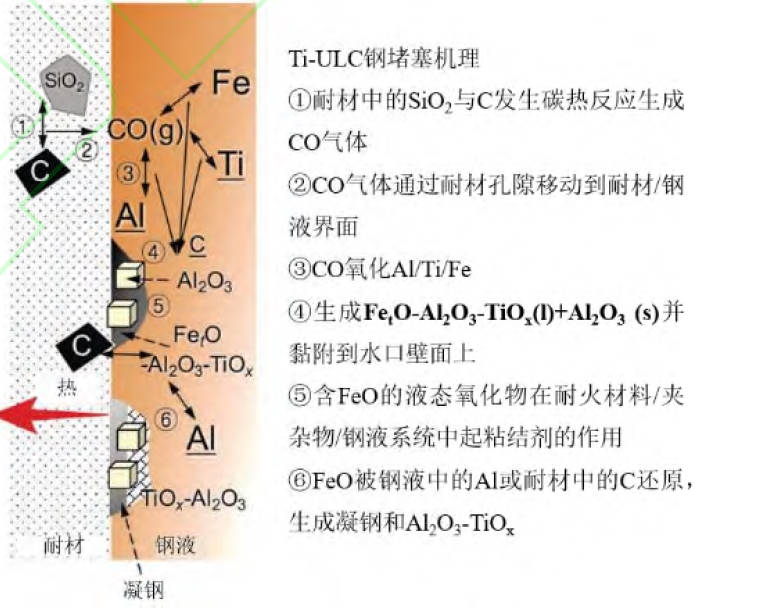
2.2 Chemical Interaction Between Molten Steel and SEN Refractories
SEN refractories, usually Al₂O₃–C or ZrO₂–C materials, undergo chemical reactions with molten steel components. Critical reactions include:
-
Reduction of nozzle oxides by carbon, forming CO gas.
-
Reoxidation by steel, causing secondary inclusion formation.
-
Diffusion-driven interfacial reactions that alter the microstructure of the refractory surface.
These reactions can generate new inclusion phases or weaken the refractory surface, making it easier for inclusions to adhere and grow. The paper highlights that such reactions significantly influence clog morphology and growth rate.
2.3 Influence of Steel Composition and Oxidation Potential
The oxygen potential in molten steel strongly governs clogging behavior. When oxygen content is unstable or too high, inclusions continuously form or grow. Key contributing factors include:
-
Residual oxygen levels
-
Aluminum activity and excessive deoxidation
-
Tramp elements or sudden changes in steel chemistry
The paper emphasizes that maintaining stable dissolved oxygen content is one of the most effective methods for reducing clogging tendency.
2.4 Argon Injection and Multiphase Flow Effects
The injection of argon gas is a widely applied industrial countermeasure to inhibit SEN clogging. However, argon bubbles influence clogging in complex ways:
-
Small bubbles promote inclusion flotation and reduce deposition.
-
Excessive flow or large bubbles cause turbulent flow patterns, re-entraining inclusions and increasing clogging.
-
Bubbles alter interfacial tension between steel and refractory surfaces.
The article notes that the optimal argon injection rate is a delicate balance between clog suppression and flow stability.
3. Microstructural and Morphological Characteristics of Clogs
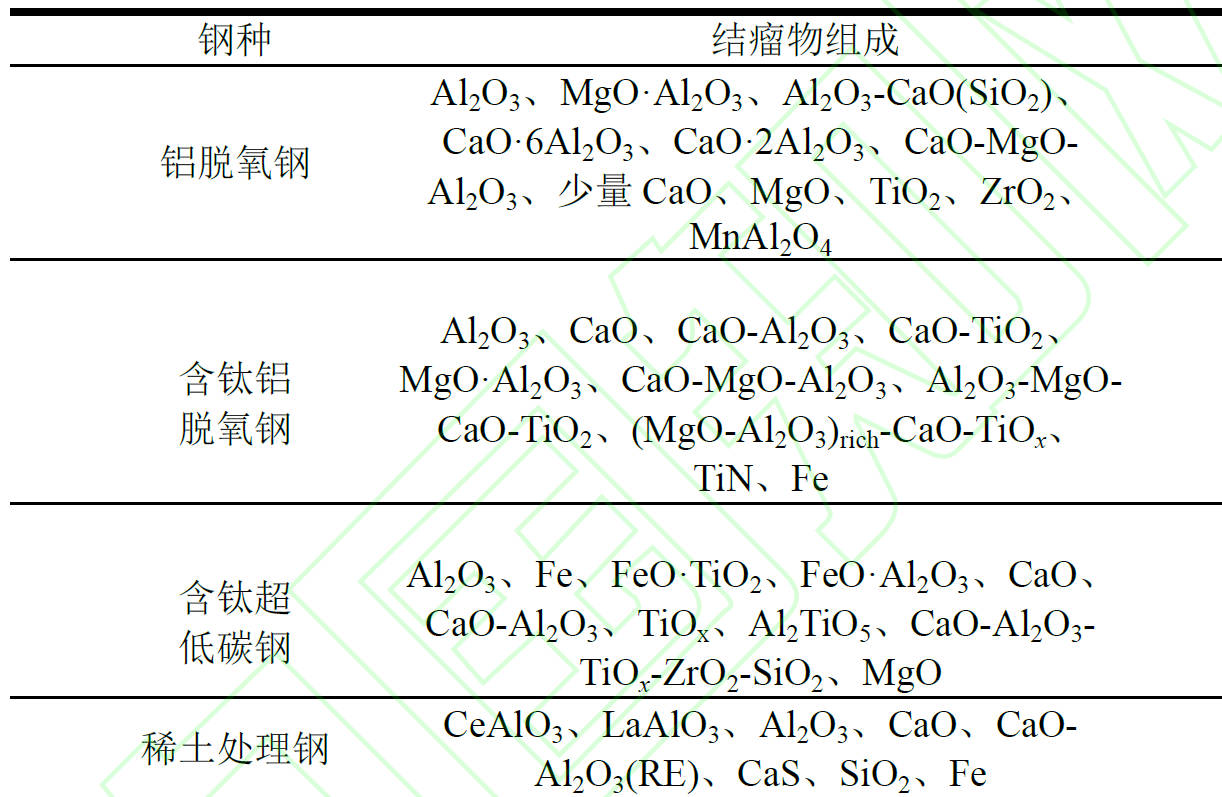
Advanced characterization methods (SEM, EDS, XRD) reveal that SEN clog deposits often consist of:
-
Al₂O₃ clusters
-
Spinel (MgAl₂O₄) inclusions
-
Calcium-modified inclusions
-
Refractory particle fragments
-
Steel–slag reaction products
The uploaded study discusses how different steel grades form different clog morphologies. For instance:
-
Al-killed steels → hard alumina clusters
-
Ca-treated steels → softer, partially liquid inclusions
-
High-Mg steels → spinel-type deposits
Morphological analysis confirms that clog growth follows a nucleation → accumulation → layered growth
4.The Role of Calcium Treatment
Calcium treatment is widely used to modify angular alumina inclusions into liquid or partially liquid Ca-aluminates. The article explains:
-
Proper Ca addition reduces clogging tendency.
-
Over-treatment forms solid Ca-aluminates, which worsen clogging.
-
Ca–Mg–Al–O inclusions exhibit complex behavior depending on steel temperature and slag composition.
This highlights the need for precise metallurgical control to ensure inclusions remain liquid at casting temperatures.
5. SEN Refractory Material Advancements
To counter clogging, SEN materials have undergone significant technological improvements:
5.1 High-Zirconia Refractories
ZrO₂–C refractories offer:
-
Stronger corrosion resistance
-
Lower chemical reactivity
-
Reduced alumina adhesion tendency
5.2 Anti-clogging Coatings
Several coatings are investigated, including:
-
Dense glaze layers
-
Low-adhesion ceramic surfaces
-
Oxidation-resistant films
-
Rare-earth-element coatings
Such coatings aim to reduce wettability and chemical reactivity with inclusions.
5.3 Low-Carbon and Carbon-Free Nozzles
Carbon in refractories can react with steel, contributing to inclusion formation. Thus, advanced low-carbon refractories are being explored to minimize secondary reactions.
The article indicates that material innovation is essential to slowing clog initiation and growth.
6. Future Research Directions
Based on the research progress summarized in the document, several future development trends are identified:
-
Multiphysics modeling of steel–inclusion–argon–refractory interactions.
-
High-temperature in-situ observation of clog nucleation.
-
Advanced refractory materials with tailored interfacial properties.
-
Real-time sensing for clog detection using electromagnetic or acoustic technology.
-
Process metallurgy optimization, including automated oxygen control and dynamic argon control.
These advances will enable more precise prediction and suppression of SEN clogging in next-generation continuous casting systems.
Conclusion
SEN clogging is a complex phenomenon driven by inclusion behavior, refractory interactions, steel chemistry, and multiphase flow. The uploaded article provides a detailed analysis of clog formation mechanisms, highlighting alumina deposition, interfacial reactions, argon behavior, and inclusion evolution as key factors. Modern strategies combining steel cleanliness control, refractory material optimization, calcium modification, and flow management are crucial to mitigating clogging. Continued interdisciplinary research will further enhance casting stability, improve steel quality, and extend nozzle service life.